Where to Go After Piano Safari Level 3?
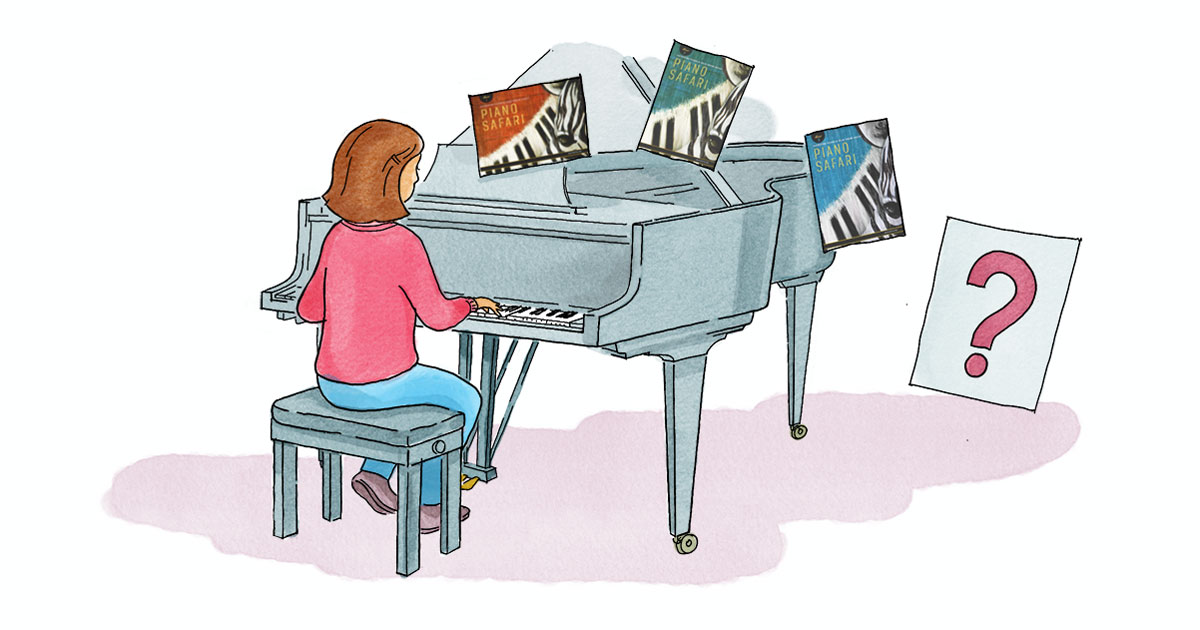
A frequent question received from teachers is what material to use after students have successfully completed Piano Safari Level 3. First, I’d like to take a moment to celebrate the fact that your students have grown to this stage in their piano study! Reaching the early intermediate level is a milestone, and is a point in which students can branch out in many directions. This is, in large part, why we decided not to continue the method beyond this stage. The piano repertoire is vast, and there are many excellent educational collections in a variety of styles for students at this level. You may already be using some with your students alongside Piano Safari.
The question is, then, how to choose quality materials that will continue to build upon the foundation your students have gained through the Piano Safari method?
Throughout my years of teaching, I’ve had many students who began their journey in Piano Safari Level 1 and have since graduated from my studio as advanced high school pianists. My years of work with these students has informed the variety of supplemental repertoire that Piano Safari now offers. I’ll divide these into categories below. Keep in mind that these suggestions are just a starting point, and that your student’s particular interests and skills should also be considered when choosing material.
Technique and Sight Reading
The Advancing Pianist series continues the technical and sight reading system that students used in Piano Safari Level 3 (both the core series and the Older Student books). If your students were thriving with daily use of the sight reading cards and the focus on healthy technical repetition that is built into the Piano Safari method, this series is the right choice for them. Here is a brief description of what each book contains. For more information, you can view sample pages and read the product descriptions on our website.
- Advancing Pianist Technique Book 1 includes exercises for keys up to two sharps and flats (major and relative minor). The technique book elevates the difficulty level of scales and technical patterns by requiring that students play hands together and over a wider range of octaves. Special exercises also include trills, 3rds, 6ths, and octaves.
- Advancing Pianist Sight Reading Book 1 contains daily eight-measure examples in a variety of textures such as counterpoint, accompaniment pattern, and four-part chorale. One unique feature of the sight reading book is that it includes longer duets that the student is to read with the teacher. These are at an easier level than the eight measure exercises, and are intended to provide an enjoyable ensemble experience while building reading skills.
- Advancing Pianist Technique Book 2 and Advancing Pianist Sight Reading Book 2: The technique and sight reading book include keys up to four sharps and flats (major and relative minor). They have the same basic design and features as The Advancing Pianist Level 1.
The Czerny Etudes for the Progressing Pianist series (three books) is an excellent complement to the Advancing Pianist. The etudes in these books were carefully selected from the vast range of Czerny’s opuses and grouped together at similar levels. After a student graduates from Piano Safari Level 3, I place them in Czerny Etudes Book 1. My goal is that my students learn one etude a week until they have completed the entire book. They always have at least two etudes on their assignment: one review etude to build technique, and one new etude to read. This system has done wonders for my students and they have all developed into excellent readers with fluent technique. An added bonus is that many of the etudes are quite patterned, and I often choose a few to use for theory study (chord analysis). As a side note, I feel it is a little known fact that Czerny wrote some beautifully lyrical etudes. These are included in the books and help prepare students for slow movements of classical sonatas and concertos.
Repertoire
As mentioned earlier, there are many directions to go with repertoire at this stage of study, and the sheer number of choices can be overwhelming! To keep things simple, I usually choose a book from a graded classical anthology for my students such as Masterwork Classics by Jane Magrath or the Celebration Series from RCM. The level depends on the student and their particular strengths and weaknesses, but I usually recommend Masterwork Classics Book 3/4 or Celebration Series Book 2/3 for a student who has just completed Piano Safari Level 3.
I pair this with some of the excellent supplemental repertoire we offer from Piano Safari. Although this list is not exhaustive, I will provide a sampling below.
- The Once Upon a Journey series (three books) by Chee-Hwa Tan explores emotion through the power of story and sound. Each piece includes a description from Chee-Hwa, practice suggestions, and listening and journaling activities. This set of books really helps students move beyond the notes and learn how music can touch our own hearts and emotions as well as help us connect with others. The first book is at an early intermediate level and the pieces increase in difficulty to a late intermediate level by the end of the third book.
- The Poetry Pack (four books) by Chee-Hwa Tan connects the poetry of Robert Louis Stevenson with pedagogically sound and musically satisfying repertoire. The Lamplighter and Windy Nights and Other Tales are perfect for students who have finished Piano Safari Level 3. Through the Windowpane and A Child’s Garden of Verses are at an easier level, but would provide approachable quick-study reading pieces even for students who have a higher playing ability. One idea I’d love to implement with these books is to have a theme recital where a poem is read before each piece is played! These books are also sold separately.
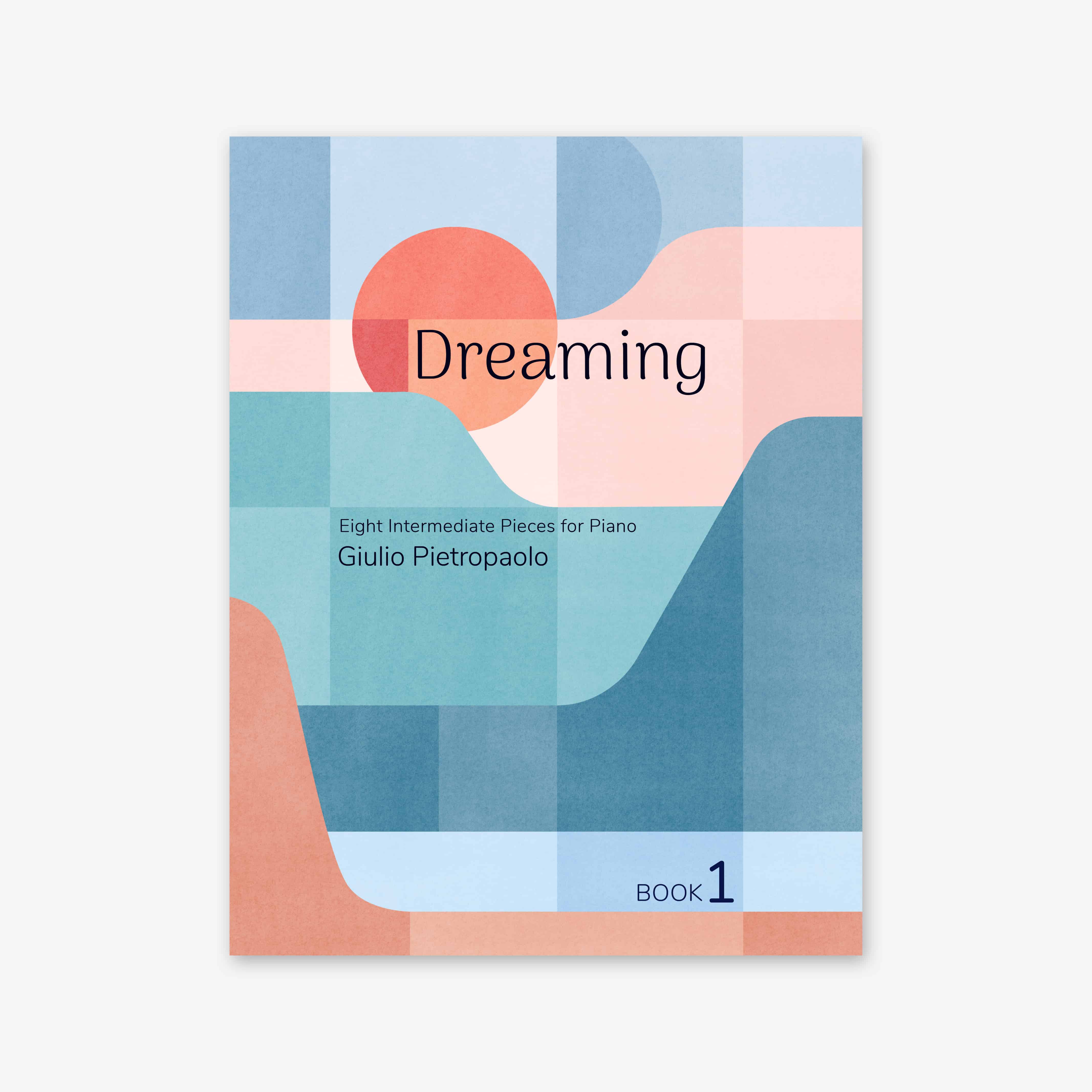
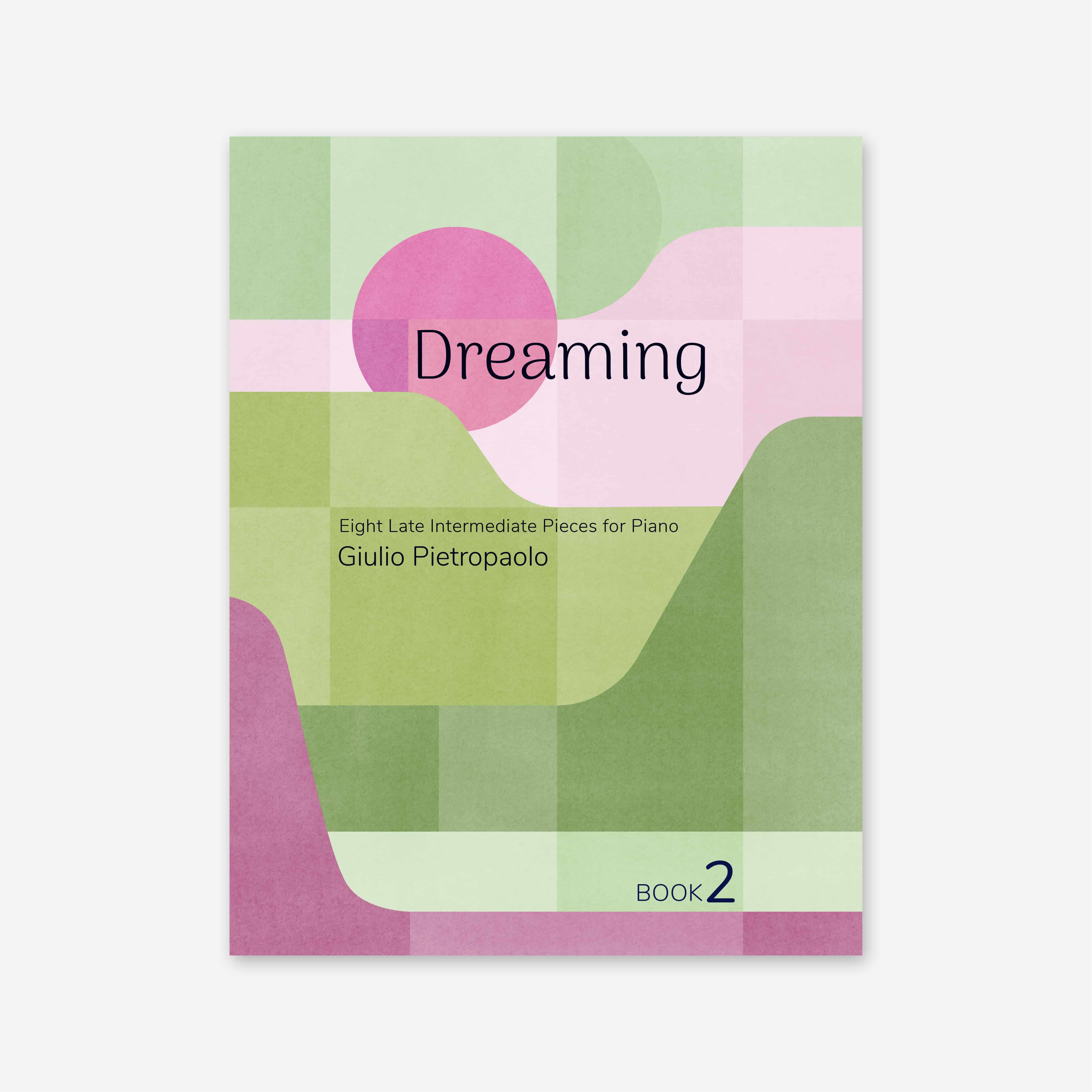
- Dreaming by Giulio Pietropaolo is a wonderful new collection of sixteen intermediate/late intermediate level pieces for solo piano, divided into two volumes of eight pieces each. The aim of Dreaming is to offer students fresh and contemporary musical material with a pianistic language that resonates with the tastes of today’s musical world. In Gulio’s words:
The title and character of the pieces reflect the connection between music and emotion, between what we live and what we dream. Dreaming is, above all, an invitation to dream through the piano, letting the sound carry us along paths that words alone cannot reach. From a pedagogical perspective, Dreaming approaches piano learning from a different angle. The challenge lies not in technical virtuosity, but in the pursuit of sound, in creating atmospheres, and in cultivating the sensitivity required to bring them to life. Each piece encourages the pianist to explore tone, resonance, and the conscious use of the pedal, developing attentive listening and sound control that allow the piano to tell its own stories.
Composition
One of the most rewarding things as a musician is to give sound to your own musical ideas through improvisation and composition. At Piano Safari, we believe that this is a process that can begin from day one of lessons! Early on, we encourage students to create their own music by modifying rote pieces and improvising. Although these musical creations are not notated, students can take joy from the creative process and perform their pieces for others. Once the early intermediate stage of study is reached, however, they are ready to begin the process of notating their musical ideas.
Composition Book 1 was created for this purpose. After students learn a model piece in a certain genre, the book leads them through specific steps to compose their own piece in the same style.
Some teachers have used this book to lead a summer composition camp, which is an idea you may want to try if you have a group of early intermediate through late intermediate students.
Holiday
The Joy of Christmas Book 3 and The Joy of Christmas Book 4 contain gorgeous solo arrangements of both sacred and popular holiday pieces. Even advanced pianists will enjoy using these collections during the holiday season, as the settings are so harmonically satisfying and musically rich. The arrangements are contributed by a variety of composers.
Material List
Here is a list of suggested materials for students who have just graduated from Piano Safari Level 3 or Piano Safari for the Older Student Level 3.
Core Early Intermediate Materials
- Advancing Pianist Technique Book 1
- Advancing Pianist Sight Reading Book 1
- Czerny Etudes for the Progressing Pianist Book 1
- Graded anthology of choice (e.g. Masterwork Classics Level 3/4 or Celebration Series Level 2/3, depending on the strength of your student)
Supplemental Early Intermediate Materials
Choose from the books below. These books provide some great recital repertoire!
- Once Upon a Journey Book 1
- The Lamplighter
- Dreaming Book 1
- The Joy of Christmas Book 3
- Composition Book 1
- Kitchen Suite
Intermediate and Early Advanced Materials
Once a student completes the volumes above, they may continue with the following:
- Advancing Pianist Technique Book 2
- Advancing Pianist Sight Reading Book 2
- Czerny Etudes for the Progressing Pianist Books 2 & 3
- Graded anthology of choice
- Once Upon a Journey Books 2 & 3
- Windy Nights and Other Tales
- Dreaming Book 2
- The Joy of Christmas Book 4
Conclusion
The late elementary to early intermediate stage of piano study is an exciting time! You have worked hard with your students to lay a solid foundation upon which to build, and your students now have the skill to pursue the styles of music they love the most. Enjoy!